Sustainability
“Ahimsa”: cultivating peace and respect for the Earth and all living beings
At Yoga Crowd, we want to make it clear that our actions have a direct impact on the environment. Therefore, we have a responsibility to make mindful decisions that protect the well-being of the planet and all its living creatures.
We feel in complete harmony and connection with Mother Nature. We draw on her wisdom and abundance to preserve our health, protect our energy, and enhance our radiance. We are aware that, as humanity, we are all part of one whole (Humee Hum Brahm Hum). That is why we strongly advocate for natural products made by people under optimal working conditions.
Responsibility and Awareness in the Use of Natural Resources
Yoga Crowd was created to remind yogis and non-yogis alike of the need to develop a sense of responsibility and awareness regarding the use of natural resources, our consumption’s impact on the environment, and how we treat the creatures that inhabit this planet. We believe in the power of unity and the power of love to enable us to live in harmony as a society and with the rest of divine creation. We believe in the strength of unity and the power of love to achieve harmony as a society and with the rest of divine creation.
We promote the use of sustainable, organic materials not only for the sake of the environment but also to benefit every person involved in the production chain. We believe in supporting small businesses and preserving traditional craftsmanship, which is not just about keeping the past alive but also about respecting cultural heritage and local communities.
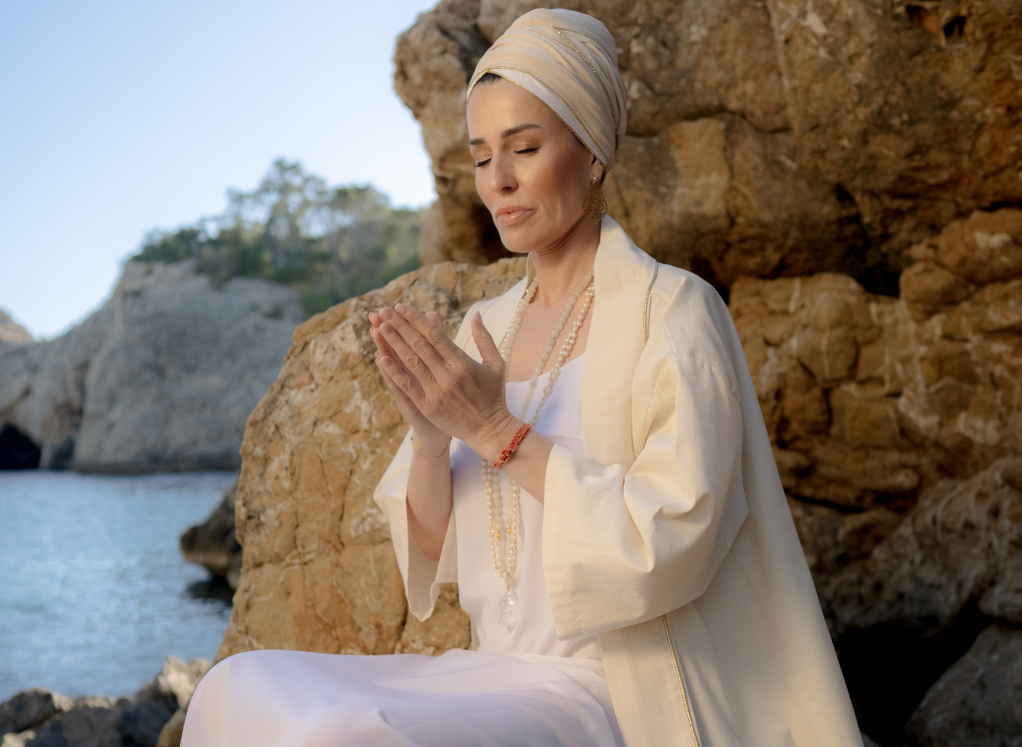
ahimsâpratist hâyâm tatsannidhau vairatyâgah
Patanjali, Sutra II.35a
We believe in a conscious lifestyle that integrates sustainability and positive impact on people and the environment.
We are committed to the use of natural, organic and cruelty-free products
Conventional textile production depends on intensive farming and the use of pesticides and large amounts of water, with a strong environmental and social impact. It is estimated that more than 99% of cotton produced globally is neither organic nor sustainable.
Synthetic materials and intensive industrial processes involve a high consumption of energy and resources, a long decomposition process and the release of polluting microfibres. Even some fibres of animal origin may conceal practices that are not respectful if they are not handled with awareness.
For this reason, at Yoga Crowd we are committed to ethical production, using materials with ecological certification and manufacturing mainly within the European Union. In the case of organic cashmere, we collaborate with artisans selected for their respectful treatment and the conscious quality of each piece.
We promote responsible and quality consumption
We have 20 times more clothing than our parents and grandparents. Aparigraha, the fifth Yama of Patanjali, speaks of non-accumulation, of living simply and with what is truly essential.
Our business model is not based on excessive and irrational consumption. We aim to promote responsible consumption of products that make your yoga practice more comfortable and intimate, while also caring for your health and your powerful electromagnetic field.
We say NO to current labour exploitation
The collapse of Rana Plaza in Bangladesh in 2013 exposed the inhumane working conditions that still exist within the fashion industry. In addition, practices that we believed had been abolished are unfortunately still common in this sector, such as child exploitation, forced labour and restrictions on trade unions.
All these practices conflict with the Yama of Ahimsa, of non-violence towards others. For this reason, at Yoga Crowd we pay attention to production details from beginning to end. Our pieces are made within the European Union in accordance with labour rights established by national laws and the standards of the International Labour Organization
We support traditional and sustainable craftsmanship in Europe
Traditional craftsmanship is regaining a prominent place among designers and consumers, as it is considered a sustainable and ethical option in today’s sector, characterised by overproduction and loss of exclusivity. The key lies in its high durability, its slow production, the use of natural materials and the protection of local identities.
At Yoga Crowd, we have entrusted the creation of our unique and exquisite designs to outstanding European artisans who work with natural materials and express all their passion in each of their pieces.
We support recycling and biodegradable materials to reduce waste
Only 15% of the clothes we no longer use are recycled or donated; the rest ends up in landfills or is incinerated. It is estimated that a truckload of used clothing is thrown away every second.
Considering that more than 70% of clothing is made from synthetic materials, whose decomposition can exceed 200 years, at Yoga Crowd we aim to give a new life to those materials already produced in those parts of our products that cannot be made with organic natural materials.
Our packaging and labels are made from plant fibres and other biodegradable organic derivatives that, over time, decompose naturally. The materials used are certified by the Forest Stewardship Council (FSC), an international non-profit organisation that promotes responsible forest management worldwide.
We develop a programme of artisanal and solidarity-based production between Europe and Asia
Collaborating with communities that promote ethical employment, labour dignity and social development in particularly vulnerable contexts. YC maintains an open and collaborative vision, exploring solidarity-based partnerships that enable the creation of real opportunities in other communities at an international level.
¿Sabías que?
Between 5 and 10% of greenhouse gas emissions
Global greenhouse gas emissions come from the fashion sector
52% of our clothes
Contains polyester
22,000 liters are spilled
Of toxic substances in Bangladesh rivers daily
200 million trees
They are cut every year for clothing manufacturing.
1 billion sheep are raised
In the world to produce wool
5 billion liters
Employs the fashion sector annually

